Types, courses and the spectrum
Where the names come from
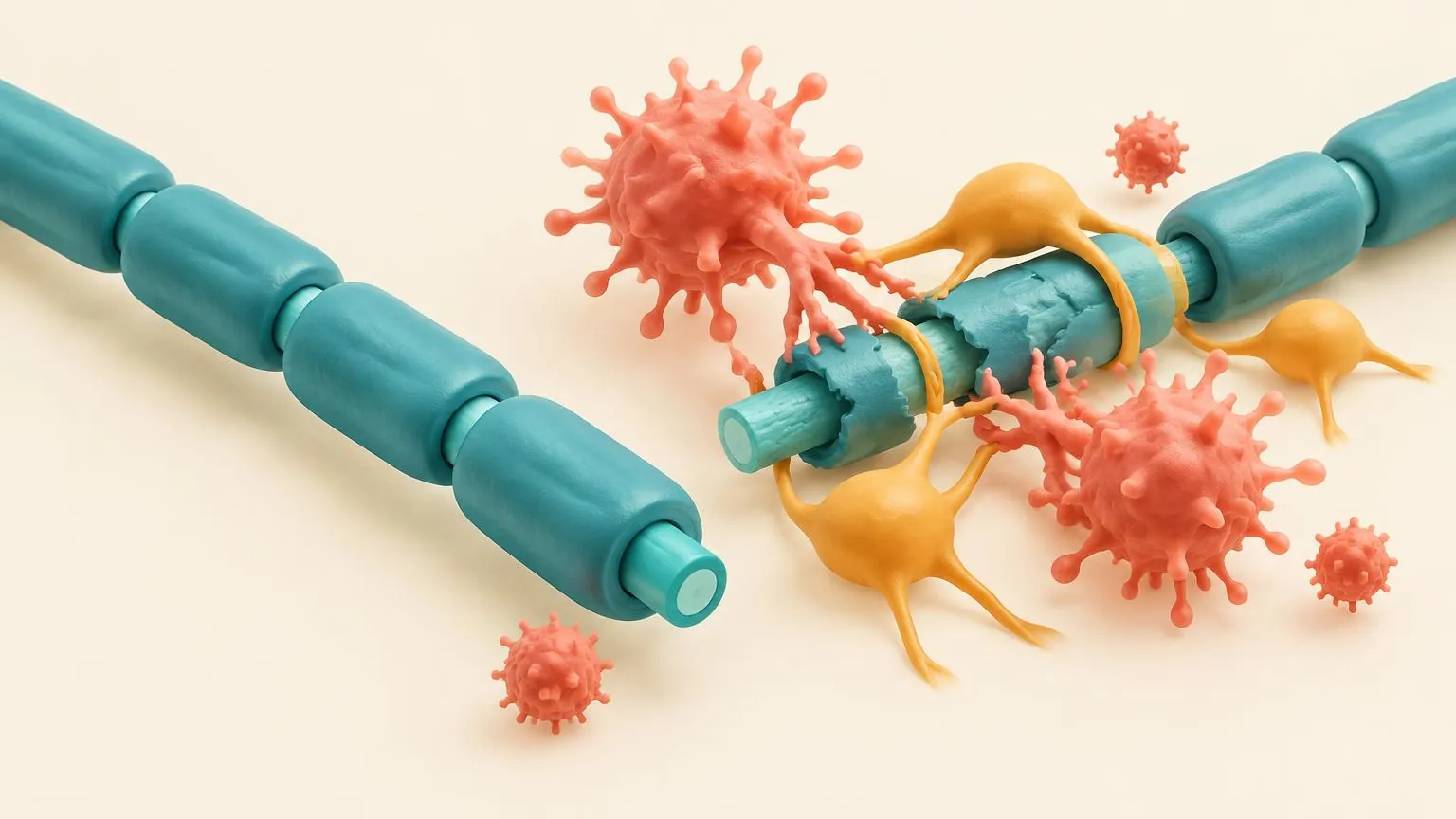
Until the 1990s, neurologists used many different names for the course of MS. In 1996 an international survey of MS experts, led by Fred Lublin and Stephen Reingold, agreed on four: relapsing-remitting, secondary progressive, primary progressive and progressive-relapsing. The definitions were revised in 2013. Progressive-relapsing MS was dropped, because people with that label are now described as having primary progressive MS with activity. Clinically isolated syndrome was added as the first presentation of the disease. Each course was also given two qualifiers, assessed at least once a year: whether the disease is active, meaning relapses or new MRI lesions, and whether it is progressing, meaning disability is worsening steadily. A person might therefore be described as having "relapsing-remitting MS, active" or "secondary progressive MS, not active, with progression".
Relapsing-remitting MS
Most people with MS start with relapsing-remitting MS (RRMS). Relapses, episodes of new or worsening symptoms lasting at least 24 hours, are followed by partial or complete recovery, with stable periods in between (lesson 4.2). Recovery does not mean that all damage has reversed. Disability can still build up, both from relapses that leave something behind and from slow worsening between them, which is often hard to notice at first.
Secondary progressive MS
Secondary progressive MS (SPMS) describes steady worsening that follows an initial relapsing course. The change is usually recognised only looking back, after a year or more of worsening, rather than at one clear moment. Relapses or new MRI activity can still occur, so progression does not mean that inflammation has stopped. Medicines are licensed for "active" SPMS in some regions, which is why the qualifier matters in practice.
Primary progressive MS
Primary progressive MS (PPMS) describes worsening from the start, without an initial relapsing phase. It does not mean uninterrupted worsening every day. Plateaus, short periods of improvement and new MRI activity can occur. The 2024 diagnostic criteria use the same framework for PPMS as for relapsing MS, and require at least 12 months of progression (lesson 5.2).
Primary progressive MS in more detail
In the ORATORIO trial, published in 2017, ocrelizumab reduced the risk of confirmed disability progression in primary progressive MS compared with placebo. It was the first time a medicine had done this in a phase 3 trial of PPMS. The approved uses differ between regions. In the EU, ocrelizumab is approved for early PPMS with signs of inflammation on imaging, while the US approval has no such restriction.
Many other approaches have been tried in PPMS and have not worked. The Research section keeps a running record of every one of them, and of the trials still under way.
Before the diagnosis: CIS and RIS
Clinically isolated syndrome (CIS) is a first episode of symptoms typical of inflammation in the brain, spinal cord or optic nerve, such as optic neuritis, in someone who does not yet meet the criteria for MS. Radiologically isolated syndrome (RIS) describes MRI lesions typical of MS in someone who has had no symptoms, usually found on a scan done for another reason. Neither is a type of MS in itself. Under the 2024 diagnostic criteria, many people with CIS, and some with RIS, can now be diagnosed with MS at the first assessment, when the scan and spinal fluid provide enough evidence.
Age at onset
MS in children. Fewer than 5 per cent of people with MS have their first symptoms in childhood. In the largest natural history study, of 394 people with onset at 16 or younger, 98 per cent started with a relapsing course, against 84 per cent of those with adult onset. They took about 10 years longer to reach secondary progression and fixed disability, but reached them about 10 years younger, at a median age of 41 for secondary progression. Children also have more relapses. In a US cohort, the relapse rate was 2.3 times that of adults over the first six years. This points to more inflammation early in the disease, while the slower build-up of disability may reflect a young brain's greater ability to compensate.
MS that starts after 50. About 5 per cent of people with MS have their first symptoms at 50 or older. In a meta-analysis of these studies, about half started with a relapsing course, and in some studies progressive onset was more common. Weakness was the most common first symptom, and the spinal cord was often involved. Diagnosis is harder at this age, because small white spots from other causes are common on MRI, which is why the 2024 criteria ask for extra evidence in people over 50 (lesson 5.2).
Labels for how severe the course is
Benign MS is used for people who have little disability after many years, usually an EDSS of 3 or less after 10 years or more. The label is controversial. Depending on the definition, between 30 and 80 per cent of people with RRMS meet it at 10 years, and it does not protect against worsening later. The EDSS also misses much of what matters. In one cohort, 43 of 342 people met the definition, and over the following years nearly half of them developed cognitive impairment and three quarters had new lesions on MRI, without any change in their EDSS.
Aggressive MS, sometimes called highly active MS, describes the opposite: frequent relapses with poor recovery and rapid build-up of disability in the first years. There is no agreed definition. A 2018 ECTRIMS workshop could not reach consensus, because data linking a severe course to imaging or blood markers were lacking. The term matters in practice, because a course like this is a common reason to start the most effective treatments early.
Rarer forms
Some people have lesions that look or behave very differently from typical MS. These forms are rare, and they matter because they can be mistaken for a brain tumour or an infection, and because some overlap with other diseases. They are known as atypical inflammatory demyelinating syndromes.
Tumefactive lesion
Larger than 2 cm, with swelling and often a ring of enhancement. Can look like a tumour.
Baló's concentric sclerosis
Rings of lost and preserved myelin, like the rings of an onion.
Schilder's disease
One or two very large lesions in the cerebral white matter, mainly in children.
Progressive solitary sclerosis
A single lesion, most often in the neck part of the spinal cord, causing slowly worsening weakness.
Tumefactive MS. A tumefactive lesion is a demyelinating lesion larger than 2 cm, often with swelling around it, pressure on nearby tissue and a ring of contrast enhancement on MRI, so that it can look like a tumour or an abscess. In the largest series, of 168 people whose lesions were confirmed by biopsy, 61 per cent had their first neurological episode at the time, and 70 per cent went on to develop MS. Most had other, smaller lesions as well, and only 17 per cent still had a single lesion at follow-up. In those followed for more than 10 years, disability was lower than in people with typical MS of the same duration, with a median EDSS of 1.5 against 3.5. Tumefactive lesions can also occur in NMOSD and MOGAD, so antibody tests are part of the work-up (lesson 10.1).
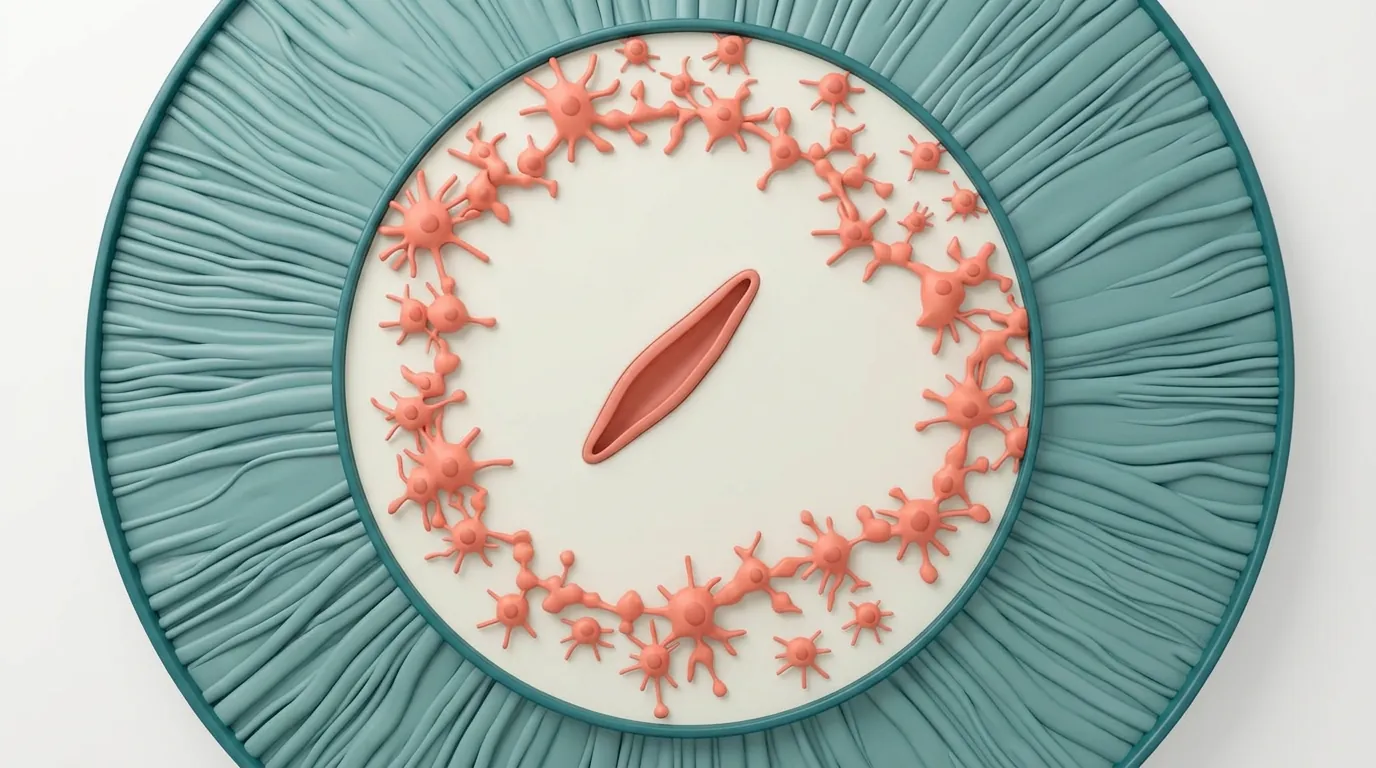
Baló's concentric sclerosis. Here a lesion forms alternating rings of lost and preserved myelin, which look like the rings of an onion or a tree on MRI and under the microscope. Large Baló lesions can resemble a tumour. In many people the lesion appears as the first episode of MS or alongside typical MS lesions, and Baló-like lesions have also been described in NMOSD.
Marburg variant. This is the most severe form: a sudden onset with many large, active lesions and rapid worsening over weeks. A 2026 systematic review found only 23 reported cases with treatment and outcome described. Six of the 23 people died. Improvement was more frequent in those who received cyclophosphamide or mitoxantrone in addition to high-dose steroids, often with plasma exchange.
Schilder's disease. Also called diffuse myelinoclastic sclerosis, it consists of one or two very large lesions in the white matter of the cerebral hemispheres, often in both, which can look like a tumour. It is mainly considered in children, and can be a single episode or relapse.
Progressive solitary sclerosis. In 2016, researchers at the Mayo Clinic described 30 people with gradually worsening weakness for more than a year caused by a single demyelinating lesion, with no other lesions and no relapses elsewhere. The lesion was most often in the neck part of the spinal cord. Half had spinal fluid findings typical of MS. These people look like progressive MS clinically, but one lesion does not meet the diagnostic criteria, and the authors suggested that future criteria could include this presentation.
Older textbooks also describe "opticospinal MS", affecting mainly the optic nerves and spinal cord, which was reported mostly in Asia. Many of those cases are now known to have been NMOSD (lesson 10.1).
From fixed types to a spectrum
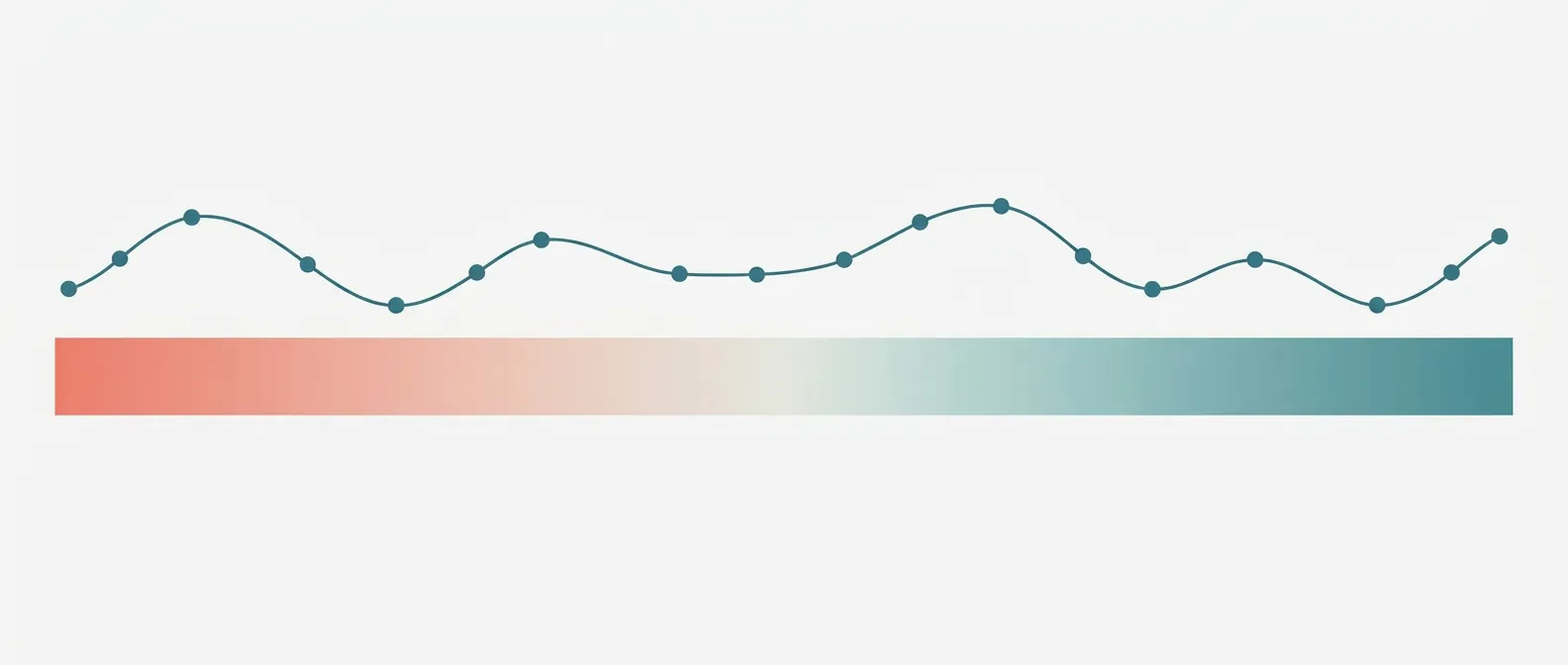
The 2013 definitions already treated the course names as descriptions of how a person presents at a given time, not as separate diseases. Fred Lublin, who led both panels, has since called them "clinical constructs based on what the patient presents with at the time."
Large datasets support a more continuous view. In the two large ocrelizumab trials in relapsing MS, most confirmed disability worsening happened without a relapse, which the authors said challenges the distinction between relapsing and progressive forms. An analysis of more than 27,000 people from trials and registries found that progression independent of relapse activity started early, occurred in every type of MS, and became the main driver of disability over time.
In 2023 an international expert group proposed treating the course of MS as a spectrum, defined by how much each of several overlapping processes contributes in a given person at a given time: focal inflammation that causes relapses and new lesions, widespread smouldering inflammation and nerve damage, and the brain's capacity to repair and compensate. Ageing increases the brain's vulnerability and reduces its resilience. In this view, what looks like a change to a progressive course is a gradual shift in that balance, not the start of a different disease. A related account argues that much of the difference between relapsing and progressive MS reflects neurological reserve, the brain's ability to compensate for damage. Early damage is hidden by reserve, and as reserve is used up by the disease and by ageing, the same slow processes become visible as progression.
Years from onset
Year 30
This course would usually be called relapsing-remitting MS, then secondary progressive MS once disability rises steadily.
The same processes produce different labels depending on when they become visible.
Lublin describes this as "viewing the disease as a spectrum", along which people "can move bidirectionally": a relapsing phase, a stable phase and a progressive phase can follow one another, and a person in a progressive phase can stabilise or have relapses again. In his words, "It's one disease along a spectrum."
What replaces the labels
The aim is to describe each person by the processes active in their disease, measured with MRI, blood and spinal fluid markers, rather than by a course label alone. Some of these measures are already in use. Paramagnetic rim lesions and the central vein sign are part of the 2024 diagnostic criteria (lesson 6.2), and neurofilament light is used in trials (lesson 7.2).
In 2026, members of the International Advisory Committee on Clinical Trials in MS, the group that wrote the 1996 and 2013 definitions, published a roadmap for moving from the current course descriptions to ones based on biology. They set out what is wrong with the current descriptions, what new ones would need, and the steps towards them. Until such descriptions are agreed and validated, the course names remain in use for diagnosis, for the licences of medicines and for deciding who can join a trial.
Common questions
Does PPMS mean no relapses can ever happen?
No. Some people with PPMS have relapses or new MRI lesions, which is why the 2013 definitions describe PPMS as active or not active.
Does RRMS mean disability cannot progress?
No. Disability can build up from relapses that leave something behind and from slow worsening between them, which large studies now find from early in the disease.
Can a course label change?
Yes. Many people who start with RRMS are later described as having SPMS, and the qualifiers active and progressing can change from one year to the next.
If my MRI showed a tumefactive lesion, do I have a worse form of MS?
Not necessarily. In the largest series, people with tumefactive lesions had on average less disability after 10 years than people with typical MS.
Is benign MS a reason not to treat?
The label is given only in hindsight, after many years, and does not predict the future course. Decisions about treatment are based on current disease activity and the person's own situation.
What we know
- The course names describe how MS has behaved in a person. They are not separate diseases.
- Worsening without relapses occurs in every type of MS and from early in the disease.
- Rare forms such as tumefactive lesions and Baló's concentric sclerosis exist, and some overlap with NMOSD and MOGAD.
What we don't know
- Which measures will reliably describe the processes active in one person, and when they can replace the labels.
- How to define aggressive MS early enough to guide treatment.
- Whether the rarest forms, such as Marburg variant and Schilder's disease, are forms of MS or separate diseases.
In the research now
Loading current research…
Key terms
- Tumefactive lesion
- A demyelinating lesion larger than 2 cm, often with swelling, that can look like a tumour on MRI.
- Baló's concentric sclerosis
- A rare form of demyelination in which a lesion forms alternating rings of lost and preserved myelin.
- Marburg variant
- A very rare, sudden and severe form of MS with many large active lesions.
- Schilder's disease
- A rare form of demyelination with one or two very large lesions in the cerebral white matter, mainly in children.
- Progressive solitary sclerosis
- Slowly worsening weakness caused by a single demyelinating lesion.
- Neurological reserve
- The brain's ability to compensate for damage, so that it does not yet cause symptoms.
- Benign MS
- A disputed label for MS with little disability after many years, usually an EDSS of 3 or less after 10 years.
- Aggressive MS
- MS with frequent relapses, poor recovery and rapid build-up of disability in the first years. There is no agreed definition.
- Optic neuritis
- Inflammation of the optic nerve, causing blurred vision and pain on moving the eye. Often the first symptom of MS.
- MOG
- Myelin oligodendrocyte glycoprotein, a protein on the outer surface of myelin. An antibody against it causes MOGAD.
- Myelin
- The fatty sheath wrapped around many nerve fibres in the brain and spinal cord. It lets signals jump quickly along the fibre. MS damages it.
- Lesion (plaque)
- An area of damage where myelin has been lost and the tissue scarred.
- Central vein sign
- A small vein running through the centre of a lesion on MRI. It can support an MS diagnosis in specified circumstances under the 2024 McDonald criteria.
- Relapse (attack)
- New or worsening symptoms lasting at least 24 hours, without fever or infection to explain them.
- EDSS
- Expanded Disability Status Scale, from 0 (normal examination) to 10, the main disability measure in trials. Its middle range depends heavily on walking.
- Confirmed disability progression
- A rise in EDSS meeting a stated threshold and still present at a check, often three or six months later. The threshold and confirmation rules vary by trial.
- CIS
- Clinically isolated syndrome: a first episode suggestive of inflammatory demyelination. Depending on the other evidence, MS may already be diagnosable.
- RIS
- Radiologically isolated syndrome: MRI changes typical of MS in someone without symptoms.
- Neurofilament light (NfL)
- A protein released when nerve fibres are damaged. Blood levels can rise with new inflammation and fall on effective treatment. Other conditions can also affect its level.
- Placebo
- A dummy treatment that looks like the real one, used so that trial results reflect the medicine itself.
- Phase 1, 2 and 3
- The stages of testing in people: safety and dose, then an early sign of effect, then a large test of benefit.
References
- Lublin FD, Reingold SC. Defining the clinical course of multiple sclerosis: results of an international survey. Neurology 1996.https://doi.org/10.1212/WNL.46.4.907
- Lublin FD, et al. Defining the clinical course of multiple sclerosis: the 2013 revisions. Neurology 2014.https://doi.org/10.1212/WNL.0000000000000560
- Montalban X, et al. Ocrelizumab versus placebo in primary progressive multiple sclerosis. N Engl J Med 2017.https://doi.org/10.1056/NEJMoa1606468
- European Medicines Agency. Ocrevus: product information.https://www.ema.europa.eu/en/documents/product-information/ocrevus-epar-product-information_en.pdf
- US Food and Drug Administration. Ocrevus prescribing information.https://www.accessdata.fda.gov/drugsatfda_docs/label/2025/761053s036lbl.pdf
- Montalban X, et al. Diagnosis of multiple sclerosis: 2024 revisions of the McDonald criteria. Lancet Neurol 2025.https://doi.org/10.1016/S1474-4422(25)00270-4
- Renoux C, et al. Natural history of multiple sclerosis with childhood onset. N Engl J Med 2007.https://doi.org/10.1056/NEJMoa067597
- Benson LA, et al. Elevated relapse rates in pediatric compared to adult MS persist for at least 6 years. Mult Scler Relat Disord 2014.https://doi.org/10.1016/j.msard.2013.06.004
- Naseri A, et al. Clinical features of late-onset multiple sclerosis: a systematic review and meta-analysis. Mult Scler Relat Disord 2021.https://doi.org/10.1016/j.msard.2021.102816
- Correale J, et al. Benign multiple sclerosis: a new definition of this entity is needed. Mult Scler 2012.https://doi.org/10.1177/1352458511419702
- Reynders T, et al. Definition, prevalence and predictive factors of benign multiple sclerosis. eNeurologicalSci 2017.https://doi.org/10.1016/j.ensci.2017.05.002
- Iacobaeus E, et al. Aggressive multiple sclerosis (1): towards a definition of the phenotype. Mult Scler 2020.https://doi.org/10.1177/1352458520925369
- Hardy TA, et al. Atypical inflammatory demyelinating syndromes of the CNS. Lancet Neurol 2016.https://doi.org/10.1016/S1474-4422(16)30043-6
- Lucchinetti CF, et al. Clinical and radiographic spectrum of pathologically confirmed tumefactive multiple sclerosis. Brain 2008.https://doi.org/10.1093/brain/awn098
- Fonseca A, et al. Baló concentric sclerosis: literature review and report of two cases. J Neuroimmunol 2024.https://doi.org/10.1016/j.jneuroim.2024.578370
- Sredanović M, et al. Towards practical management of the Marburg variant of multiple sclerosis. Mult Scler Relat Disord 2026.https://doi.org/10.1016/j.msard.2025.106908
- Lin WS, et al. Long-term outcome of Schilder disease treated with interferon-β. Pediatrics 2019.https://doi.org/10.1542/peds.2019-0505
- Kappos L, et al. Contribution of relapse-independent progression vs relapse-associated worsening to overall confirmed disability accumulation in typical relapsing multiple sclerosis. JAMA Neurol 2020.https://doi.org/10.1001/jamaneurol.2020.1568
- Keegan BM, et al. Progressive solitary sclerosis: gradual motor impairment from a single CNS demyelinating lesion. Neurology 2016.https://doi.org/10.1212/WNL.0000000000003235
- Lublin FD, et al. How patients with multiple sclerosis acquire disability. Brain 2022.https://doi.org/10.1093/brain/awac016
- Kuhlmann T, et al. Multiple sclerosis progression: time for a new mechanism-driven framework. Lancet Neurol 2023.https://doi.org/10.1016/S1474-4422(22)00289-7
- NeurologyLive. NeuroVoices: Fred Lublin, MD, on shifting from phenotypes to spectrum-based perspectives. 8 January 2025.https://www.neurologylive.com/view/neurovoices-fred-lublin-shifting-phenotypes-spectrum-based-perspectives-advance-ms-care
- Vollmer TL, et al. Multiple sclerosis phenotypes as a continuum: the role of neurologic reserve. Neurol Clin Pract 2021.https://doi.org/10.1212/CPJ.0000000000001045
- Thompson AJ, Lublin FD, et al. Towards a biologically informed description of multiple sclerosis disease course: a roadmap for transition. Nat Rev Neurol 2026.https://doi.org/10.1038/s41582-026-01249-0
Next · Lesson 2 of 2
Relapses, PIRA and NEDA
Disability in MS builds up in two ways: left behind by relapses, or slowly without them. This lesson explains how each is defined and measured, how much each contributes, and what "no evidence of disease activity" does and does not tell you.
Continue