Genetics of susceptibility and severity
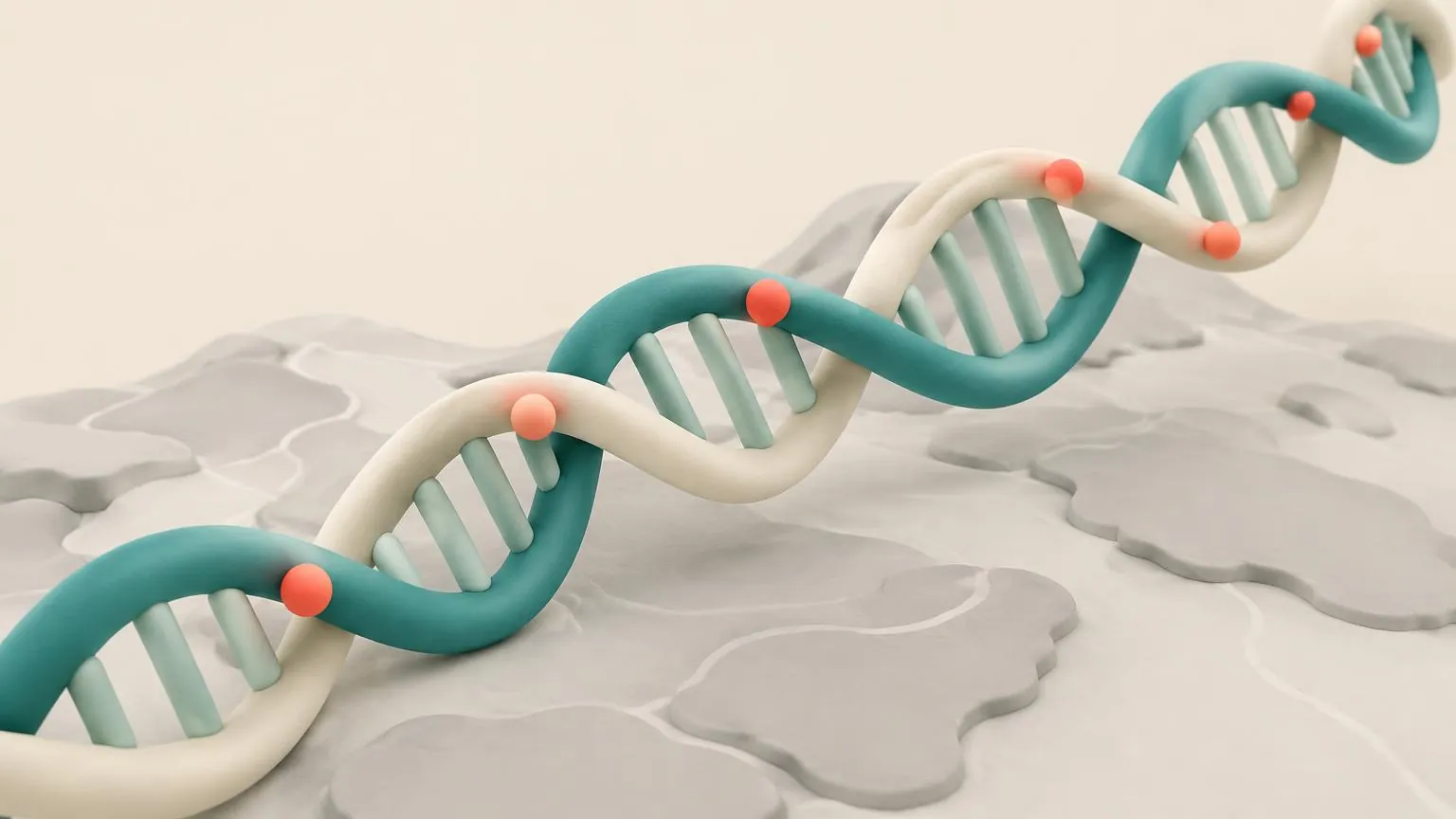
MS runs in families, but weakly
Relatives of people with MS have a higher risk than the general population, but most never develop it. The most reliable figures come from Swedish national registries, which identified 28,396 people with MS and their relatives. A brother or sister of someone with MS had about seven times the risk of a matched member of the population. The risk was the same through mothers and fathers, and lower than earlier estimates from clinic-based studies. Because MS is uncommon, even a sevenfold risk leaves most siblings unaffected. Family risk reflects shared environment as well as shared genes.
HLA: the strongest single factor
The strongest genetic influence lies in the HLA region, the genes for the molecules that show protein fragments to T cells (lesson 2.2). HLA-DRB1*15:01, a version of a class II gene, carries the largest single risk. A detailed map of the region in 17,465 people with MS and 30,385 controls found several further class II risk versions and four class I versions that protect, including HLA-A*02:01. That both raising and lowering risk work through how protein fragments are shown to T cells is strong evidence that T cells are central to how MS starts.
More than 200 small effects
Outside the HLA region, a study of 47,429 people with MS and 68,374 controls mapped 200 risk variants on the ordinary chromosomes, one on the X chromosome and 32 more within the wider HLA region. Each has a small effect on its own. Most lie near genes that regulate the immune system rather than the nervous system, and they are active in many kinds of immune cell, including microglia. The authors concluded that MS is most likely triggered by changes in the peripheral immune system that then target the brain.
Severity is a different story
Genes that raise the risk of getting MS say little about how severe it will be. In 2023 a study of 12,584 people with MS, confirmed in a further 9,805, found the first genetic variant linked to severity, in a region between the genes DYSF and ZNF638. People with two copies of the risk version needed a walking aid a median of 3.7 years sooner. Heritability of severity was concentrated in genes active in the brain, not in immune cells, and a genetic analysis suggested that more education might protect. Together these findings point to resilience of the nervous system, rather than the immune attack alone, as a decider of outcome. That supports treating progression with medicines that protect the nervous system, alongside those that calm inflammation.
Where the risk came from
Ancient DNA has added a historical answer to why MS is commonest in northern Europe. Comparing genomes from the Stone Age to the medieval period, researchers found that the genetic risk for MS rose among herders of the Pontic steppe, north of the Black Sea, and arrived in Europe with their descendants about 5,000 years ago. The same variants were favoured by natural selection, probably because they helped defend against infections at a time of changing diet, way of life and population density. Variants that once protected against infection may now raise the risk of an immune attack on the nervous system in a very different environment.
Steppe ancestry and MS risk

Step 1 of 3 · About 5,000 years ago
What this means in practice
No genetic test can tell an individual whether they will develop MS, and genetic testing is not part of diagnosis. For relatives, the useful message is about the risk factors that can be changed, such as not smoking, and the evidence on vitamin D and weight in adolescence (lesson 8.1). For research, genetics points to the immune cells that start MS and to the brain's resilience as the place where severity is decided.
Check yourself
What we know
- A sibling of someone with MS has about seven times the population risk, yet most remain unaffected.
- HLA-DRB1*15:01 is the strongest single genetic risk factor, and more than 200 other variants each add a little, mostly in immune genes.
- Severity is linked to different genes, active in the brain rather than in immune cells.
What we don't know
- How the risk variants work together with EBV and other exposures in a given person.
- What the severity variant does in brain cells.
- Whether genetic information can ever guide treatment choices for individuals.
In the research now
Loading current research…
Key terms
- Genetic variant
- A difference in the DNA sequence between people. Most risk variants for MS are common and have small effects.
- Ancient DNA
- DNA recovered from human remains thousands of years old, used to trace how genes spread.
- HLA
- Human leucocyte antigen: molecules that display protein fragments to T cells. Different versions change MS risk.
- T cell
- A white blood cell that recognises a specific target and directs or carries out an immune attack.
- Microglia
- The resident immune cells of the brain and spinal cord. In MS they sustain slow inflammation at the edges of chronic lesions.
- Relapse (attack)
- New or worsening symptoms lasting at least 24 hours, without fever or infection to explain them.
- Epstein-Barr virus (EBV)
- A common herpes virus that causes glandular fever. Infection appears to be almost necessary for MS, but most infected people never develop it.
- HLA-DRB1*15:01
- A version of an immune gene that is the strongest single genetic risk factor for MS.
References
- Westerlind H, et al. Modest familial risks for multiple sclerosis: a registry-based study of the population of Sweden. Brain 2014.https://doi.org/10.1093/brain/awt356
- Moutsianas L, et al. Class II HLA interactions modulate genetic risk for multiple sclerosis. Nat Genet 2015.https://doi.org/10.1038/ng.3395
- International Multiple Sclerosis Genetics Consortium. Multiple sclerosis genomic map implicates peripheral immune cells and microglia in susceptibility. Science 2019.https://doi.org/10.1126/science.aav7188
- International Multiple Sclerosis Genetics Consortium and MultipleMS Consortium. Locus for severity implicates CNS resilience in progression of multiple sclerosis. Nature 2023.https://doi.org/10.1038/s41586-023-06250-x
- Barrie W, et al. Elevated genetic risk for multiple sclerosis emerged in steppe pastoralist populations. Nature 2024.https://doi.org/10.1038/s41586-023-06618-z
Next module · Who gets MS
Who gets MS
How many people live with MS, where they live, and why the numbers are rising.
Continue