Biologics and small molecules
Small molecules
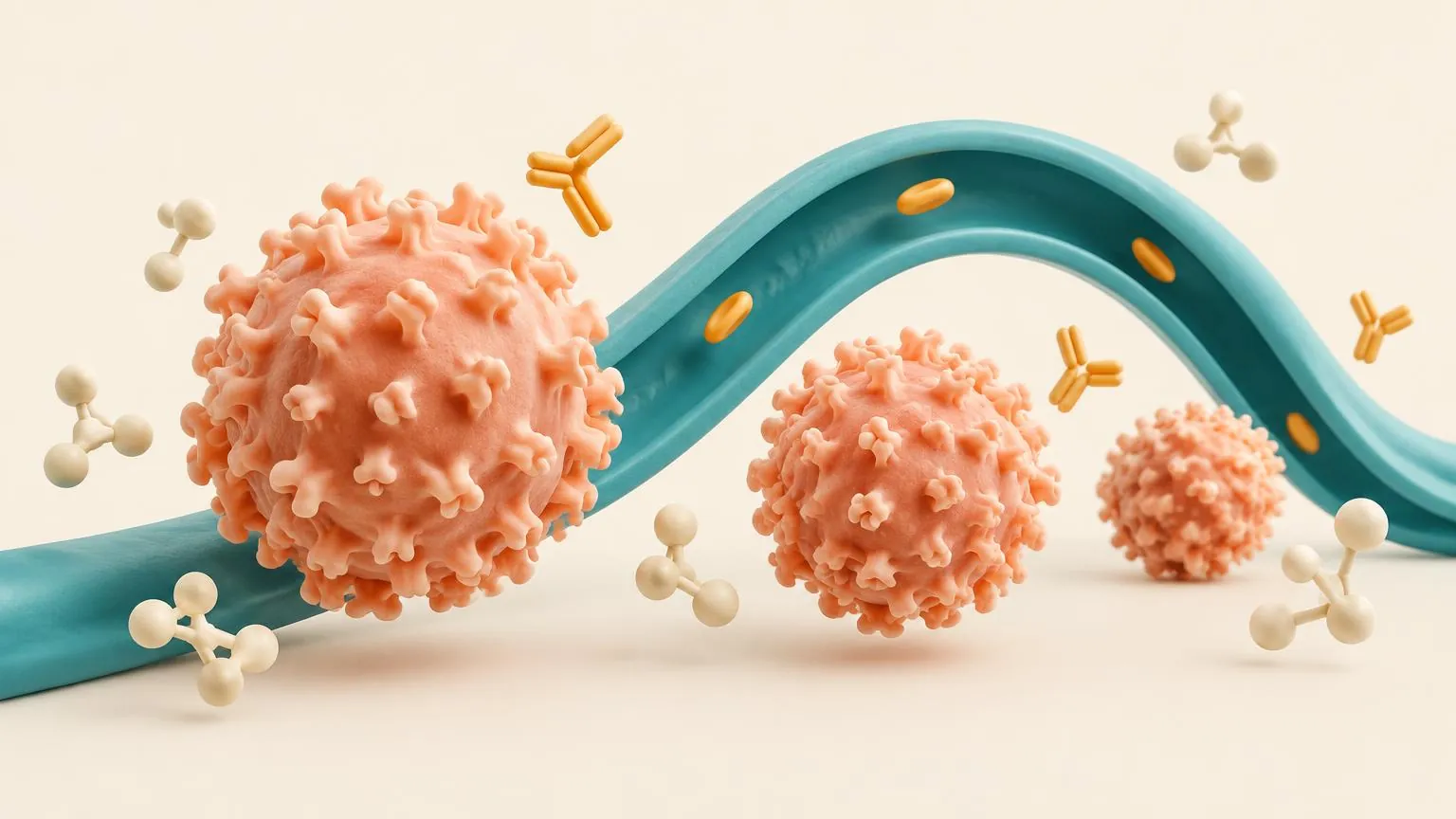
A small-molecule medicine is a chemical compound small enough to be absorbed from the gut, so most can be taken by mouth. Fingolimod, teriflunomide, the fumarates, cladribine and the BTK inhibitors are small molecules. Some of them pass from the blood into the brain, which is one reason small molecules are being tested against the inflammation that sits behind the blood-brain barrier.
Biologics
A biologic is a large molecule, usually a protein, made by living cells grown in tanks. In MS most biologics are monoclonal antibodies, proteins designed to attach to one target on one type of cell. Natalizumab, ocrelizumab, ofatumumab, ublituximab and alemtuzumab are antibodies, and interferon beta is a protein the body makes itself. Proteins are broken down in the gut, so biologics have to be injected or infused, and they are too large to cross the blood-brain barrier in any quantity. They act mainly on immune cells in the blood and lymph nodes.
Reading a medicine's name
The international names of medicines are built from shared stems that hint at what a medicine is. Names ending in -mab identify monoclonal antibodies under the former naming scheme, such as ocrelizumab. WHO introduced new stems for newly named antibodies in 2021. Names ending in -tinib, such as tolebrutinib, are kinase inhibitors, which block an enzyme inside cells. Fingolimod and siponimod share the stem -imod, used for medicines that modulate the immune system.
How long the effect lasts
Many small molecules are cleared from the body within days, but clearance and the duration of their effects vary. Teriflunomide is an exception: it can persist for many months, and an accelerated elimination procedure may be used when rapid clearance is needed. Antibodies that remove cells, such as the anti-CD20 medicines, leave an effect that lasts for months, until the body has made new cells. Cladribine and alemtuzumab go further. They are given in short courses, and the effect lasts for years. For research, this decides whether a trial is testing continuous suppression or a one-off change to the immune system.
Copies
When a patent ends, other companies can make copies. A copy of a small molecule is a generic and is chemically identical to the original. A copy of a biologic is a biosimilar, a biological medicine highly similar to one already approved, which has to be shown in comparative studies to work in the same way. The medicine pages in the Research section show which MS medicines have generics or biosimilars in the EU.
In the research now
Loading current research…
Key terms
- Blood-brain barrier
- The tight lining of the small blood vessels of the brain and spinal cord, which keeps most immune cells and large molecules out.
- Biologic
- A medicine made by living cells, usually a protein such as an antibody, given by injection or infusion.
- Small molecule
- A relatively small, chemically made drug molecule. Many are taken as tablets, but some are given by other routes.
- Monoclonal antibody
- A laboratory-made antibody designed to attach to one target. Many names end in -mab, but newer naming conventions use other endings.
- Anti-CD20
- Medicines that remove B cells by attaching to the CD20 protein on their surface, such as ocrelizumab and ofatumumab.
- BTK inhibitor
- A medicine that blocks Bruton’s tyrosine kinase, an enzyme involved in signalling in B cells and microglia. How well it enters the brain varies between medicines.
References
- 1. Brinkmann et al. · Fingolimod (FTY720): discovery and development of an oral drug to treat multiple sclerosis. Nature Reviews Drug Discovery (2010)
- 2. Kuhlmann et al. · Multiple sclerosis progression: time for a new mechanism-driven framework (2023)
- 3. Greenfield and Hauser · B-cell therapy for multiple sclerosis: entering an era. Annals of Neurology (2018)
- 4. WHO · International Nonproprietary Names
- 5. Giovannoni et al. · A placebo-controlled trial of oral cladribine for relapsing multiple sclerosis (CLARITY). NEJM (2010)
- 6. European Medicines Agency · Biosimilar medicines: overview
- 7. FDA · Aubagio prescribing information, elimination procedure
Next · Lesson 3 of 11
From an idea to an approved medicine
Animal models, the three phases of trials, comparators, regulators and the signals that can mislead.
Continue