In short

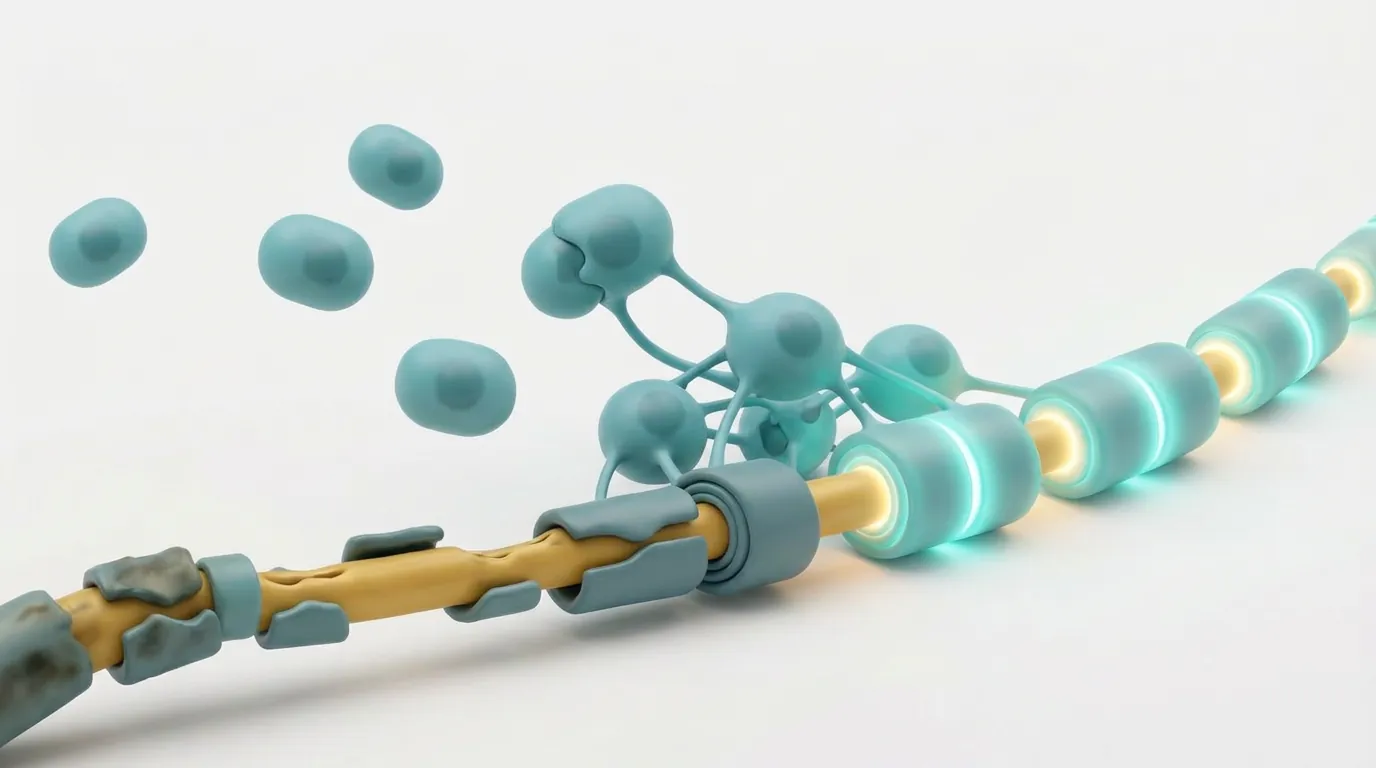
Instead of suppressing the immune system for life, some treatments remove much of it once and let it grow back.

If the regrown immune system no longer attacks the nervous system, the disease could stop without ongoing treatment.

Stem-cell transplants can halt inflammatory MS for years in some people. CAR-T cells and tolerance therapies are in early trials.

Background in MS in depth

Hypotheses by status

  • Supported by one trial 1
  • Results pending 1
  • Being tested 10
  • No clear answer 1
13
Hypotheses
4
Trials recruiting
3
Phase 3 running
0
Readouts in 90 days

Most recent results

    No full results recorded yet.

    Few results have been reported here recently.

    Next readouts

    ConfirmedSupported by one trialPromisingMixedResults pendingBeing testedFailed earlyDisprovenNo clear answerNot yet tested

    Trials to watch

    Loading trials to watch…

    All trials to watch →

    Routes towards a cure

    Towards a cure: several routes, not one

    A cure would mean more than preventing relapses. Research must address continuing injury, recovery of function and, ultimately, preventing MS from starting. Immune resets are one part of that work, not its sole destination.[13]

    AHSCT uses conditioning treatment followed by a person’s own blood-forming stem cells to support immune reconstitution. A retrospective multicentre cohort found better progression-free survival in people with relapsing disease than in those with progressive disease. It was not a randomised comparison with current medicines, and conditioning and transplantation carry substantial risks.[7]

    CAR-T cell therapies, first developed for blood cancers, are being tested in MS to target B cells. Whether deeper or longer-lasting depletion improves disability enough to justify the risks is still an open question, and early results without a comparison group cannot show that a treatment cures MS.[16]

    The published Pathways to Cures roadmap groups the ambition into stopping disease activity and progression, restoring lost function, and ending MS through prevention. The routes below follow that framework, in no order of likely success.[13]

    Target the viral trigger

    5 trials running · furthest phase 2

    Prevent EBV infection or change the response to an existing infection.

    Preventive and therapeutic vaccine candidates are being studied. Horizon’s phase 2 primary outcomes assess safety and reactogenicity in people with MS. Disease-activity measures are also being explored.[2][15][14]

    Does EBV remain a treatable driver after MS begins, and can vaccination ultimately prevent MS?

    Reset or reshape immunity

    8 trials running · furthest phase 4

    Reduce disease-driving immune cells or rebuild the immune repertoire.

    AHSCT has clinical evidence in selected people, particularly with inflammatory relapsing disease. CAR-T remains investigational in MS, while transplant trials compare it with current high-efficacy medicines.[7][17][16]

    Which people benefit, how durable is the effect, and how do infection and other risks compare with standard treatment?

    Restore immune tolerance

    2 trials running · furthest phase 2

    Teach the immune system not to attack relevant antigens, rather than suppressing immunity broadly.

    Myelin peptide-coupled cells have been studied in a small phase 1 human trial for feasibility and tolerability, not efficacy. A non-inflammatory mRNA approach reduced disease in mice. It has not established benefit in people with MS.[10][18][13]

    Which antigens matter in each person, and can selective tolerance be achieved safely and durably?
    References

    1. [1]Kuhlmann et al. · Multiple sclerosis progression: time for a new mechanism-driven framework (2023)
    2. [2]Bjørnevik et al. · Longitudinal analysis of Epstein-Barr virus and MS (2022)
    3. [3]Absinta et al. A lymphocyte–microglia–astrocyte axis in chronic active multiple sclerosis. Nature, 2021
    4. [4]Mahad, Trapp and Lassmann. Pathological mechanisms in progressive multiple sclerosis. Lancet Neurology, review (2015)
    5. [5]Green et al. Clemastine fumarate as a remyelinating therapy for multiple sclerosis (ReBUILD). Lancet, 2017
    6. [6]Neumann et al. Metformin restores CNS remyelination capacity by rejuvenating aged stem cells. Cell Stem Cell, 2019
    7. [7]Muraro et al. Long-term outcomes after autologous hematopoietic stem cell transplantation for multiple sclerosis. JAMA Neurology (2017)
    8. [8]Sanofi · PERSEUS primary progressive MS update (15 December 2025), sponsor announcement
    9. [9]Genentech · FENtrepid topline results (9 November 2025), sponsor announcement
    10. [10]Lutterotti et al. Antigen-specific tolerance by autologous myelin peptide-coupled cells: a phase 1 trial in MS (2013)
    11. [11]Fox et al. Tolebrutinib in nonrelapsing secondary progressive MS. NEJM (2025)
    12. [12]Montalban et al. Safety and efficacy of evobrutinib in relapsing multiple sclerosis (evolutionRMS1 and evolutionRMS2): two multicentre, randomised, double-blind, active-controlled, phase 3 trials. Lancet Neurology (2024)
    13. [13]Bebo et al. Pathways to cures for multiple sclerosis: a research roadmap (2022)
    14. [14]ClinicalTrials.gov. Therapeutic EBV vaccine mRNA-1195 in MS, NCT06735248
    15. [15]ClinicalTrials.gov. Preventive EBV vaccine mRNA-1189, NCT05164094
    16. [16]ClinicalTrials.gov. UCSF phase 1 KYV-101 study in treatment-refractory progressive MS, NCT06451159
    17. [17]ClinicalTrials.gov. BEAT-MS, NCT04047628
    18. [18]Krienke et al. A noninflammatory mRNA vaccine for treatment of experimental autoimmune encephalomyelitis. Science (2021)
    19. [19]Lebrun-Frénay et al. Teriflunomide and time to clinical multiple sclerosis in patients with radiologically isolated syndrome: the TERIS randomized clinical trial. JAMA Neurology (2023)
    20. [20]Okuda et al. Dimethyl fumarate delays MS in radiologically isolated syndrome. Annals of Neurology (2023)

    Background in MS in depth

    Assembled by software from public sources and not checked by people. Each record links to its source. Report an error