What starts MS
In short
Most people catch the Epstein-Barr virus and never develop MS, yet almost everyone with MS has had it. Genes and other factors such as smoking, low vitamin D and obesity in adolescence decide who is at risk.
If the trigger can be stopped, MS could be prevented rather than treated. This frontier follows the trials testing that idea.
Vaccines against the virus are in early trials, and treating people whose scans show changes before any symptoms has delayed the first attack in two trials.
Ideas tested so far: treating early MS to delay it
- Confirmed 3
- Supported by one trial 1
- Results pending 1
- Being tested 1
- Failed early 1
- No clear answer 5
- 12
- Hypotheses
- 1
- Trials recruiting
- 0
- Phase 3 running
- 0
- Readouts in 90 days
Most recent results
No full results recorded yet.
Few results have been reported here recently.
Next readouts
Oct 2027
natalizumab
What starts MS: a virus and a genetic background
Long-term studies point to the Epstein-Barr virus as a major cause of MS. Infection alone does not explain who develops the disease, and the full pathway from infection to nerve damage is still being worked out.[1][5][2]
In a cohort of more than ten million US military personnel, MS risk increased 32-fold after EBV infection. Serum neurofilament light, a marker of nerve-fibre injury, increased only after EBV infection in those who later developed MS. The other viruses examined, including cytomegalovirus, did not show the same association with MS risk.[1]
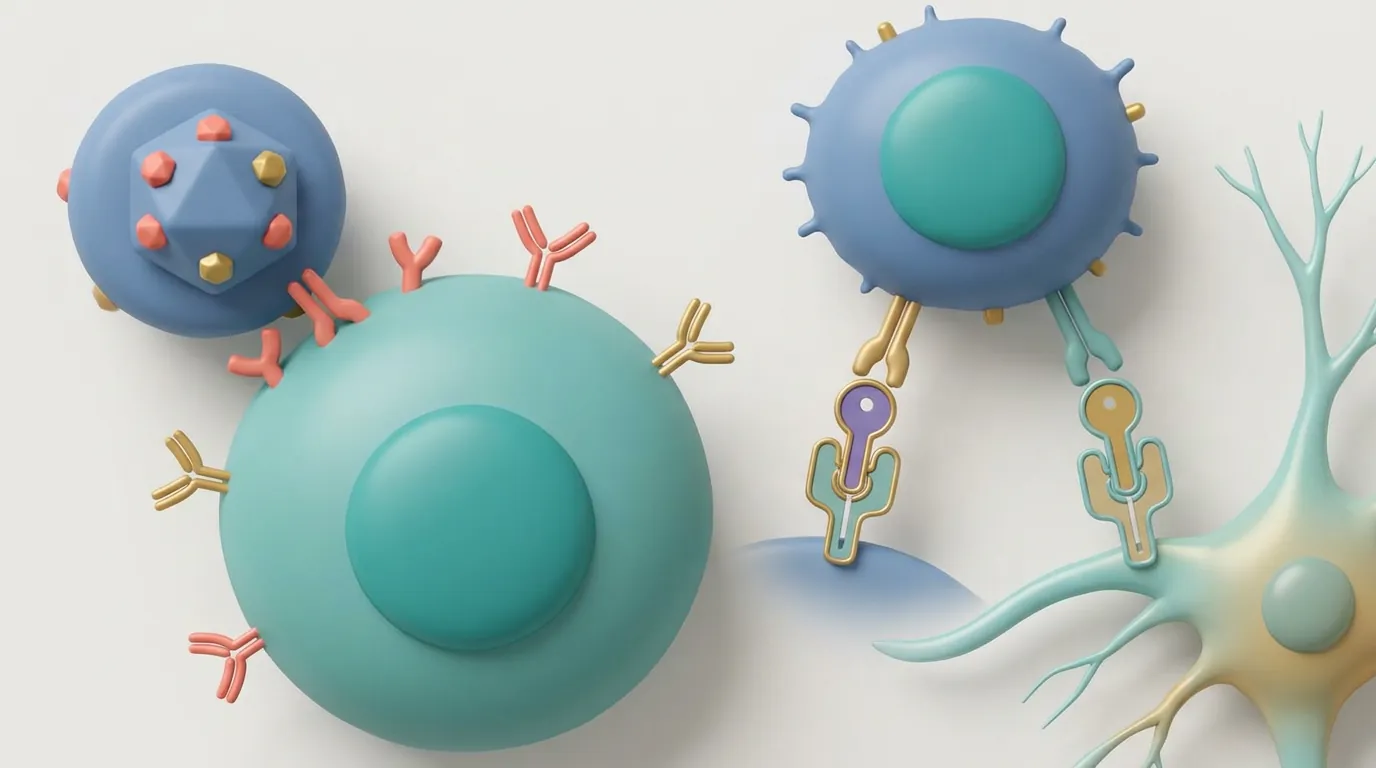
One proposed mechanism involves molecular mimicry. Researchers identified antibodies in some people with MS that bind both EBNA1 and GlialCAM. This is one possible link between the immune response to the virus and an attack on the nervous system, and it may not apply to everyone with MS.[5]
Most people carry EBV and never develop MS. A 2019 genetic map found 233 genetic variants linked to MS risk, most of them in genes of the immune system. Whether targeting EBV changes established MS remains a separate question from whether preventing infection could prevent MS.[2][1]
Other factors raise the risk in people who carry the virus: smoking, low vitamin D levels, and obesity in adolescence. They are covered with their evidence in lesson 8.1, Causes and risk factors.[3][4]
Preventing MS and recognising it earlier
Prevention is now a testable research goal, although reducing the likelihood of a first clinical event is different from proving that MS has been prevented for life.[10][9][6]
Two randomised trials studied people with radiologically isolated syndrome, meaning MRI findings suggestive of demyelination without a corresponding clinical episode. ARISE tested dimethyl fumarate and TERIS tested teriflunomide. Both reduced or delayed first clinical events during follow-up. Longer follow-up is needed to understand durable benefit and the balance between early treatment and overtreatment.[10][9]
Preventive EBV vaccines are being studied in people without MS, while therapeutic vaccination asks a different question in people who already have it. Showing that a vaccine prevents MS will take long studies of large numbers of people.[8][7][1]
References
- [1]Bjørnevik et al. · Longitudinal analysis of Epstein-Barr virus and MS (2022)
- [2]International MS Genetics Consortium · Multiple sclerosis genomic map implicates peripheral immune cells and microglia (2019)
- [3]Olsson, Barcellos and Alfredsson. Interactions between genetic, lifestyle and environmental risk factors for multiple sclerosis. Nature Reviews Neurology (2017)
- [4]MS Society. Vitamin D and MS
- [5]Lanz et al. Clonally expanded B cells in multiple sclerosis bind EBV EBNA1 and GlialCAM. Nature, 2022
- [6]Bebo et al. Pathways to cures for multiple sclerosis: a research roadmap (2022)
- [7]ClinicalTrials.gov. Therapeutic EBV vaccine mRNA-1195 in MS, NCT06735248
- [8]ClinicalTrials.gov. Preventive EBV vaccine mRNA-1189, NCT05164094
- [9]Lebrun-Frénay et al. Teriflunomide and time to clinical multiple sclerosis in patients with radiologically isolated syndrome: the TERIS randomized clinical trial. JAMA Neurology (2023)
- [10]Okuda et al. Dimethyl fumarate delays MS in radiologically isolated syndrome. Annals of Neurology (2023)
Assembled by software from public sources and not checked by people. Each record links to its source. Report an error