Assembled by software from public sources.
Stopping relapses
How well can relapses and new lesions be stopped?
Treatments exist13 confirmed · 62 running · 10 failed
In short
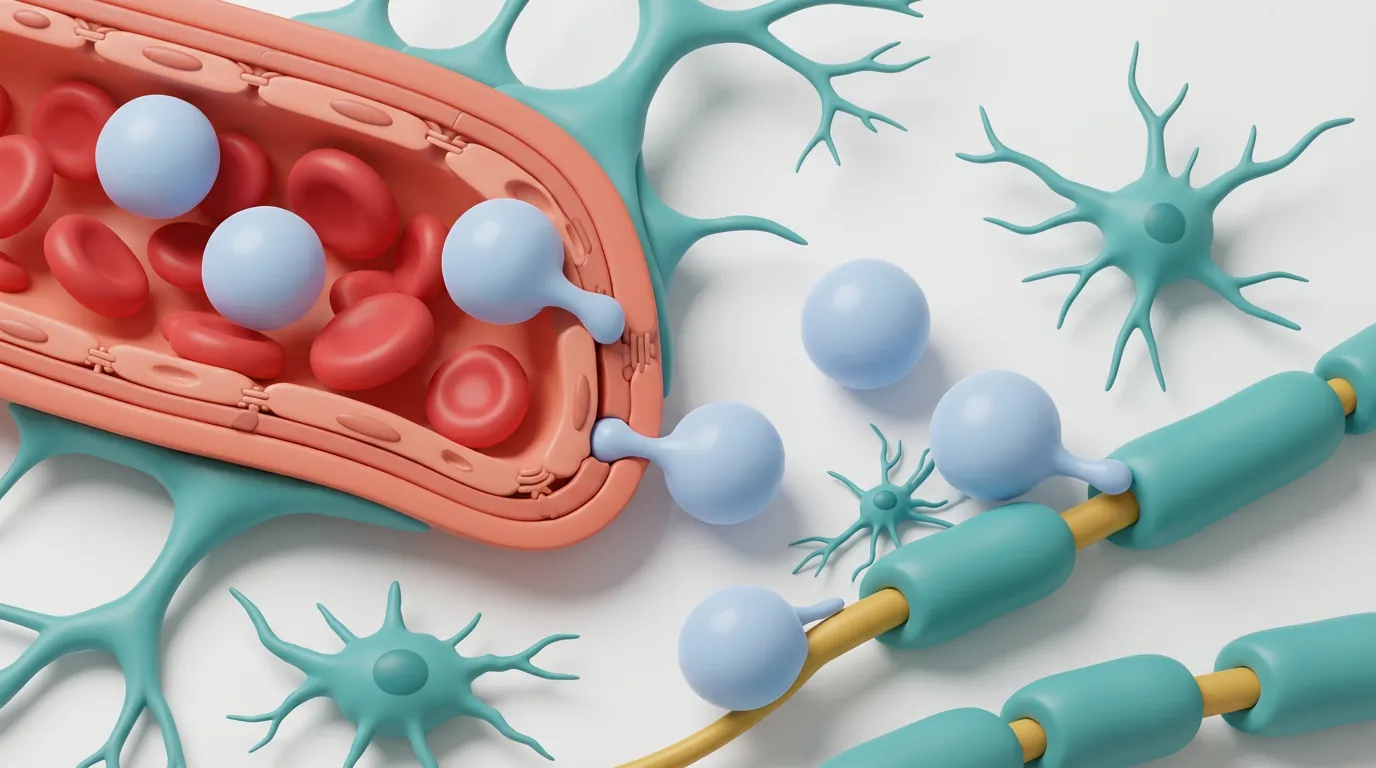
Relapses and new lesions come mainly from immune cells that travel from the blood into the brain and spinal cord.
Stopping them prevents the damage each attack leaves behind, and it is where treatment has advanced most.
Several medicines now prevent most relapses in many people. The open questions are safety, cost, how long to treat and whether early, strong treatment changes the long-term course.
Where we are
- For most people relapses can be stopped. B-cell therapies, S1P modulators, natalizumab and immune reconstitution cut relapses by half or more against placebo or older medicines.
- The open questions are about use, not whether: when to start the strongest medicines, when to stop, and dosing by blood level.
- BTK inhibitors are the next class. Fenebrutinib beat teriflunomide in two phase 3 trials reported in 2026, and tolebrutinib did not.
- Safety over decades, in pregnancy, in children and in older people is where most new evidence now comes from.
Written by the editors from the records below. Last reviewed 6 November 2026. Not yet reviewed by an MS specialist.
The evidence
What works
- B-cell depletion (anti-CD20) · Relapsing MS
Divozilimab · 12 trials running
- B-cell depletion (anti-CD20) · Relapsing and progressive MS
Ocrelizumab · 6 trials running
- S1P receptor modulation (lymphocyte trafficking) · Relapsing MS
Amiselimod · 5 trials running
- DHODH inhibition (pyrimidine synthesis) · Relapsing and progressive MS
Interferon · 3 trials running
- Fumarates / NRF2 · Relapsing MS
Dimethyl fumarate · 2 trials running
- Interferon beta · Relapsing MS
Doxycycline anhydrous · 2 trials running
Being tested
- BTK inhibition (B cells and microglia) · Relapsing and progressive MS
Evobrutinib · 4 trials running
- Fumarates / NRF2 · Relapsing and progressive MS
Dimethyl fumarate · 2 trials running
- B-cell depletion (anti-CD20) · Primary progressive MS
Ocrelizumab · 1 trial running
- B-cell depletion (anti-CD20) · Secondary progressive MS
Ocrelizumab · 1 trial running
- B-cell depletion (anti-CD20) · MS (type not specified)
Rituximab · 1 trial running
- Cyclophosphamide anhydrous · Relapsing and progressive MS
Cyclophosphamide anhydrous · 1 trial running
Did not work
- Temelimab · Relapsing MS
Temelimab
- Abatacept · Relapsing MS
Abatacept
- Fluoxetine · Secondary progressive MS
Fluoxetine
- Amiloride · Secondary progressive MS
Amiloride
What comes next
Results due and trials to watch
- Metformin, phase 2
Metformin · MS, type not stated · Jan 2027
- ENHANCE
Ublituximab · Relapsing MS · Jan 2027
- FREXALT
Frexalimab · Relapsing MS · May 2027
- TOTEM-RRMS
Testosterone · Relapsing MS · Dec 2027
- Remibrutinib, phase 3
Remibrutinib · Relapsing MS · Jul 2029
- Ublituximab, phase 3
Ublituximab · Relapsing MS · Jan 2030
Open questions
- Does starting with a highly effective medicine give a better long-term course than escalating?Phase 3 running
- Can treatment be stopped safely in older people whose MS has been stable for years?Phase 3 running
- Do longer intervals between doses work as well as standard dosing?Nothing running
- Do B-cell therapies slow disability worsening that happens without relapses?Phase 3 running
- Is stem cell transplantation better than the most effective medicines?Phase 3 running
- Can CAR-T cell therapy stop MS without continuous treatment?Trials running
Further reading
Reviews and guidelines
No reviews are linked to this area yet.
Lab research
No lab studies are linked to this area yet.
References
The sources behind this area's background are listed with its Research background in MS in depth. Every trial, hypothesis, review and lab study above links to its own record.